




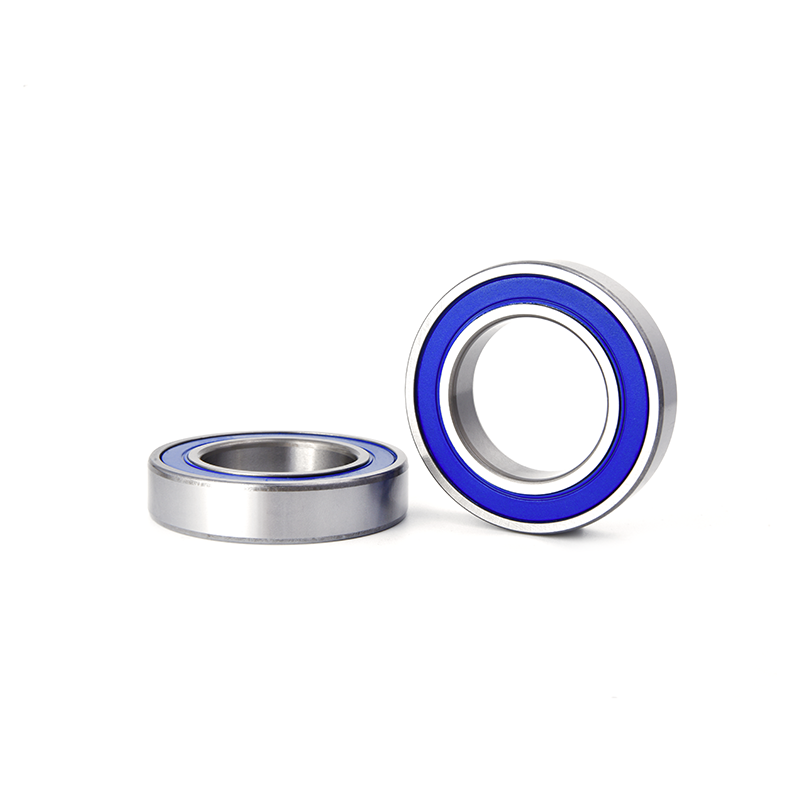
To read a bearing number, break it into three sections: the prefix (bearing type and series), the basic number (bore size and outer dimensions), and the suffix (internal design, clearance, sealing, and tolerance). For example, in the designation 6205-2RS C3, "6" identifies a deep-groove ball bearing, "2" indicates the dimension series, "05" encodes a 25 mm bore, "2RS" means two rubber seals, and "C3" specifies a larger-than-normal internal clearance. Understanding this system allows engineers, maintenance technicians, and purchasing teams to identify, cross-reference, and replace any bearing without relying solely on the original equipment manufacturer's parts list.
Why Learning How to Read Bearing Numbers Matters
Knowing how to read bearing numbers correctly prevents costly mismatches during maintenance and procurement. A single digit error in a bearing number can result in selecting a component with the wrong bore diameter, load capacity, or clearance class — leading to premature failure, unplanned downtime, or even safety incidents. In industrial facilities, unplanned bearing failures account for approximately 13% of all rotating equipment downtime according to industry maintenance studies. The ISO 15:1998 standard and the widely adopted ISO 355 system provide a globally recognized framework for bearing number identification, used by virtually every bearing manufacturer worldwide.
The Three-Part Structure of a Bearing Number
Every standard bearing designation follows a consistent three-part structure. Mastering this layout is the foundation of reading any bearing identification number accurately.
| Section | Position in Number | What It Encodes | Example |
| Prefix | Before the basic number | Bearing type, subtype, or material | L (flanged ring), K (needle roller) |
| Basic Number | Core of the designation | Bearing type digit + dimension series + bore code | 6205 |
| Suffix | After the basic number | Seals, clearance, tolerance, cage, grease type | 2RS C3 |
Table 1: The three structural sections of a standard bearing number and what each one encodes.
How to Read the Basic Bearing Number: Type, Series, and Bore
The basic bearing number is the core of any bearing designation and typically consists of 2 to 5 digits that encode bearing type, dimension series, and bore size in that order.
Step 1 — Identify the Bearing Type Digit
The first digit (or first two digits for some types) identifies the fundamental bearing design. This single digit tells you the rolling element geometry and intended load direction before you examine any other part of the number.
| Type Digit | Bearing Type | Primary Load Direction | Typical Application |
| 1 | Self-aligning ball bearing | Radial | Conveyor shafts, misaligned housings |
| 2 | Spherical roller bearing | Radial + axial | Paper mills, mining equipment |
| 3 | Tapered roller bearing | Radial + axial (combined) | Automotive wheel hubs, gearboxes |
| 4 | Deep-groove ball bearing (double row) | Radial + moderate axial | Electric motors, pumps |
| 5 | Thrust ball bearing | Axial only | Vertical shafts, screw jacks |
| 6 | Deep-groove ball bearing (single row) | Radial + moderate axial | Most common — motors, fans, appliances |
| 7 | Angular contact ball bearing | Combined radial and axial | Spindles, high-speed machine tools |
| N / NU / NJ | Cylindrical roller bearing | Radial (high load) | Heavy industrial gearboxes, turbines |
Table 2: ISO bearing type digits, corresponding bearing types, load directions, and typical applications.
Step 2 — Decode the Dimension Series
The digit immediately after the type code identifies the dimension series, which defines the relationship between the bore diameter and the outer ring dimensions. In the number 6205, the "2" is the dimension series digit, indicating a light series bearing with a relatively small outer diameter and narrow width for its bore size. Series "3" is a medium series (heavier load capacity), and series "4" is a heavy series. For example, a 6305 (medium series) has an outer diameter of 62 mm compared to the 6205 (light series) outer diameter of 52 mm — both sharing the same 25 mm bore. Choosing the wrong series results in a bearing that does not fit the housing.
Step 3 — Decode the Bore Size Code
The last two digits of the basic number encode the bore diameter using one of three methods depending on the size range. This is the most critical measurement for shaft fit selection.
- Bore codes 00 to 03 use a fixed lookup table: 00 = 10 mm, 01 = 12 mm, 02 = 15 mm, 03 = 17 mm.
- Bore codes 04 to 96 use the formula: bore diameter (mm) = bore code x 5. So a code of "05" = 25 mm, "08" = 40 mm, "12" = 60 mm, "20" = 100 mm.
- Bore codes below 04 for miniature bearings (bore under 10 mm) are written as the actual bore size in mm preceded by a slash, such as 618/8 meaning an 8 mm bore deep-groove ball bearing.
- Bore codes above 96 (bore over 480 mm) are also written as the actual bore size after a slash, for example 6/500 for a 500 mm bore bearing.
How to Read Bearing Number Suffixes: Seals, Clearance, and Tolerance
The suffix section of a bearing number contains critical application data that determines operating performance — two bearings with identical basic numbers but different suffixes can have completely different service lives in the same application.
Sealing and Shielding Suffix Codes
Sealing codes appear directly after the basic number and identify whether the bearing is open, shielded, or sealed — and on how many sides.
| Suffix Code | Meaning | Contact with Shaft? | Regreasing Possible? |
| (no suffix) | Open bearing | No | Yes |
| Z | One metal shield | No (non-contact) | One side only |
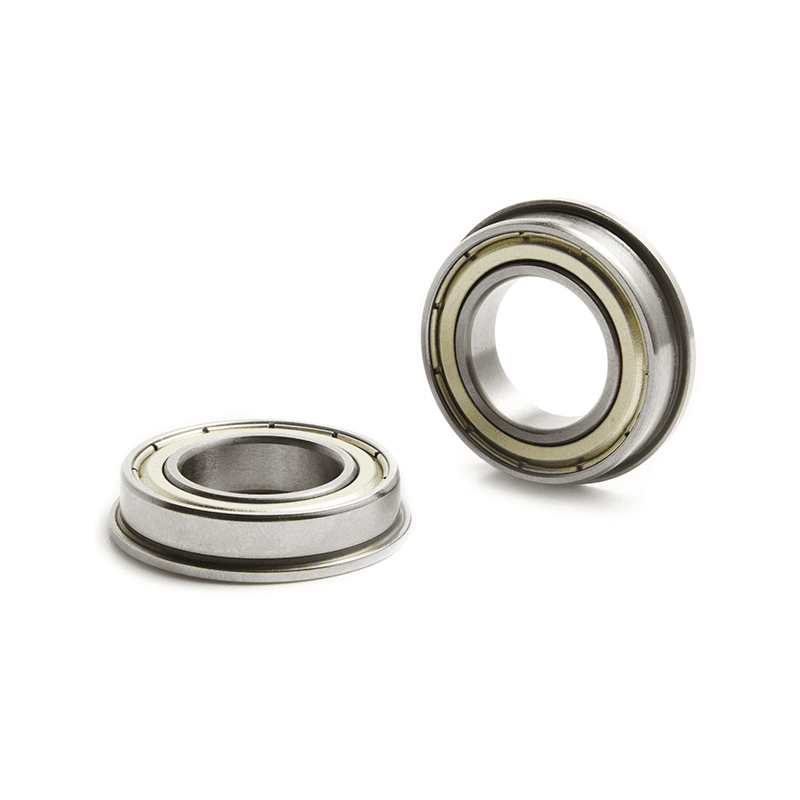
| 2Z | Two metal shields (both sides) | No (non-contact) | No (factory greased) |
| RS | One rubber contact seal | Yes (contact) | One side only |
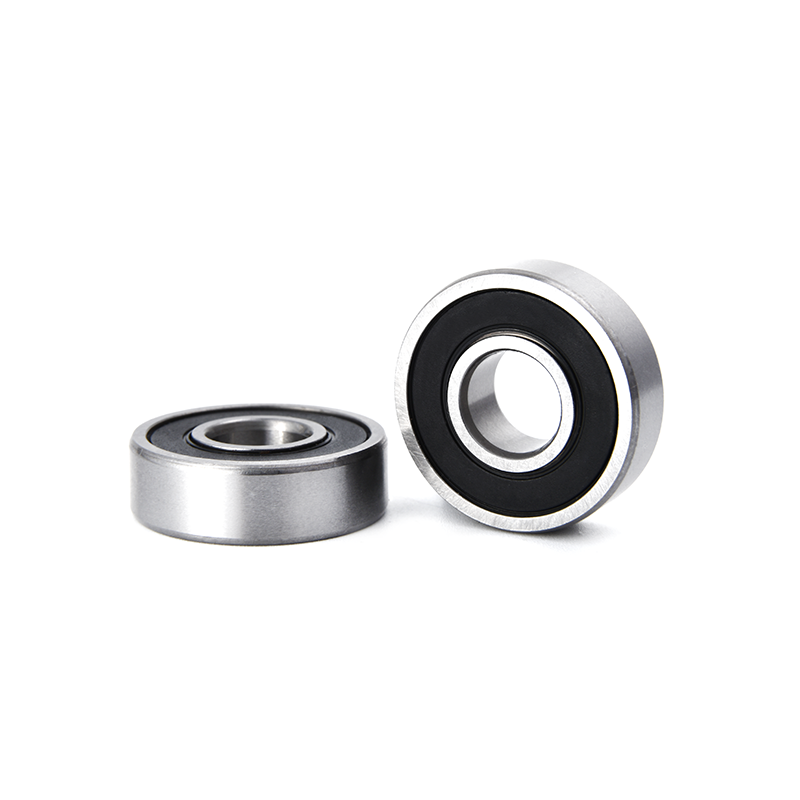
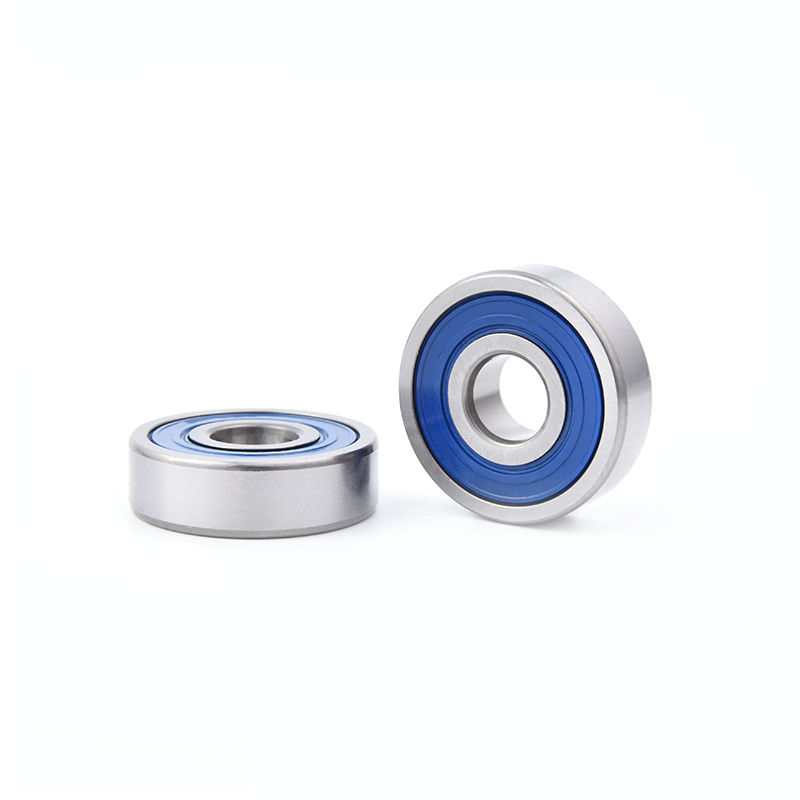
| 2RS | Two rubber contact seals | Yes (contact) | No (factory greased, sealed for life) |
| RZ | One low-friction rubber seal | Near-contact (low drag) | One side only |
Table 3: Common bearing sealing and shielding suffix codes with contact type and regreasing capability.
Internal Clearance Suffix Codes
Internal clearance codes define how much free space exists between the rolling elements and raceways before the bearing is installed and loaded. Selecting the wrong clearance class is one of the most common causes of early bearing failure in heated applications.
- C1 — Smaller than C2. Used in precision instruments requiring near-zero play.
- C2 — Smaller than Normal (CN). Used in precision applications with light interference fits.
- CN (no suffix) — Normal clearance. Standard for most general-purpose applications at room temperature.
- C3 — Greater than Normal. Used when operating temperature rise is expected (motors, dryers, elevated ambient). This is the second most common suffix seen in the field.
- C4 — Greater than C3. Used in very high temperature environments or heavy interference fits.
- C5 — Greater than C4. Used in extreme temperature applications such as furnace equipment and steel mill drives.
As a practical reference: a 6205 C3 has a radial internal clearance of 11–25 micrometers, while the same bearing in CN (Normal) has only 7–18 micrometers of clearance. That difference of a few micrometers determines whether a bearing survives a 100°C temperature rise on a motor shaft or fails within weeks.
Tolerance Class Suffix Codes
Tolerance codes define the precision of the bearing's dimensions and rotational accuracy, following the ISO 492 standard. P0 (or no suffix) is Normal tolerance and covers the vast majority of industrial applications. P6 is higher precision, used in precision gearboxes and moderate-speed spindles. P5 and P4 are used in high-speed machine tool spindles. P2 is the highest standard tolerance class, used in gyroscopes, precision instruments, and aerospace applications. Each step up in precision class can increase bearing cost by 3 to 10 times, so specifying a higher class than necessary is a significant unnecessary expense.
How to Read Bearing Number Prefixes
Prefixes appear before the basic number and are less common than suffixes, but they carry important information about ring type, component designation, or subunit configuration.
- L — Separable ring or washer (used in tapered roller and thrust bearings to identify the inner or outer ring ordered separately)
- R — Inner ring only of a separable bearing
- K — Roller and cage assembly without inner or outer ring (used in needle roller arrangements)
- WS / GS — Shaft washer or housing washer of a needle roller thrust bearing
- T — Tapered bore (same function as the /TxxK suffix in some systems)
Full Bearing Number Decoding Example: 7308 BECBP
A worked example is the fastest way to consolidate everything learned about how to read bearing numbers. The designation 7308 BECBP is decoded as follows:
| Code Segment | Value | Meaning |
| 7 | Type digit | Angular contact ball bearing |
| 3 | Dimension series | Medium series (wider and heavier than series 2) |
| 08 | Bore code | 08 x 5 = 40 mm bore diameter |
| BE | Suffix — contact angle | 40-degree contact angle (standard for this type) |
| C | Suffix — design detail | Optimized inner ring (reduced stress concentration) |
| BP | Suffix — arrangement | Single bearing for back-to-back or face-to-face pairing |
Table 4: Full decoding of bearing designation 7308 BECBP segment by segment.
Comparing Similar Bearing Numbers: What Changes and Why It Matters
Many maintenance errors stem from selecting a bearing with a number that looks almost identical to the correct one. The following comparison shows how small changes to bearing numbers produce significantly different components.
| Bearing Number | Bore (mm) | OD (mm) | Width (mm) | Key Difference |
| 6205 | 25 | 52 | 15 | Baseline — light series, open |
| 6305 | 25 | 62 | 17 | Medium series — 10 mm larger OD, higher load |
| 6206 | 30 | 62 | 16 | Next bore up — 5 mm larger shaft diameter |
| 6205-2RS | 25 | 52 | 15 | Same dimensions, rubber sealed both sides |
| 6205-2RS C3 | 25 | 52 | 15 | Sealed + greater internal clearance for heat |
Table 5: Comparison of similar bearing numbers showing how each digit or suffix change affects physical dimensions and performance specification.
Frequently Asked Questions About Reading Bearing Numbers
Are bearing numbers the same across all manufacturers?
The basic ISO numbering system is standardized, so a 6205 from any ISO-compliant manufacturer has the same bore, outer diameter, and width. However, suffix codes for seals, clearance, and cage materials can differ slightly by manufacturer — for example, some manufacturers use "DDU" where others use "2RS" to mean a rubber-sealed bearing. When cross-referencing between sources, always verify that the suffix meanings match, not just the characters.
What does the "NJ" mean in cylindrical roller bearing numbers like NJ 2210?
In cylindrical roller bearing numbers, the letters before the digits indicate the flange configuration on the rings. NU means no flanges on the inner ring and two flanges on the outer ring (inner ring free to float axially). NJ means one flange on the inner ring and two on the outer ring (can take light axial load in one direction). N means two flanges on the inner ring and none on the outer ring. The choice between these configurations determines whether the bearing can accommodate axial shaft expansion or must be a fixed location bearing.
What does "/C" or a slash followed by numbers mean in a bearing number?
A slash followed by a number in a bearing designation typically encodes one of two things. For miniature or large bearings, it specifies the actual bore diameter in millimeters (e.g., 608/6 = 6 mm bore). For tapered roller bearings following ABMA standards common in North America, a number after a slash such as 32210/32210 may refer to a matched pair or assembly designation. Always consult the appropriate dimensional standard for the bearing type in question to interpret slash codes correctly.
How do I find a replacement if the bearing number has worn off?
If the bearing number is no longer readable, measure the three key dimensions directly: bore diameter (ID), outer diameter (OD), and width (W) using a digital caliper. With all three measurements, you can use any bearing dimension table to reverse-engineer the bearing number. For example, a bearing measuring 25 mm ID x 52 mm OD x 15 mm W is a 6205 in light series. Additionally, photograph the cage design and rolling element shape, which help identify bearing type (ball, roller, needle) and enable a technician to confirm the designation.
What is the difference between C3 and C4 clearance in bearing numbers?
Both C3 and C4 are greater-than-normal internal clearance classes, but C4 provides more clearance than C3. For a 6205 bearing, C3 radial clearance is approximately 11–25 micrometers while C4 is approximately 18–36 micrometers. C3 is the standard choice for electric motors operating at moderate temperatures (up to 80°C rise above ambient). C4 is reserved for applications with heavy interference fits on both the shaft and housing simultaneously, or for very high temperature environments such as industrial dryers and kiln drives where thermal expansion would fully consume C3 clearance.
Can I substitute a 2Z (double-shielded) bearing for a 2RS (double-sealed) bearing?
Yes in some cases, but not universally. A 2Z double-shielded bearing uses non-contact metal shields that offer slightly lower running torque and can withstand higher temperatures (metal shields tolerate up to 120–150°C, rubber seals up to 100–110°C typically). However, 2Z shields provide less contamination exclusion than 2RS rubber contact seals. In a clean, dry, moderate-temperature environment, 2Z is a viable substitute. In a wet, contaminated, or washdown environment, 2RS should not be replaced with 2Z, as water and fine particulates will enter the bearing through the shield gap and cause premature raceway damage.
Quick Reference: How to Read a Bearing Number in 4 Steps
Use this four-step checklist any time you need to quickly decode an unfamiliar bearing number in the field or at a workbench.
- Step 1 — Isolate the prefix (if any). Look for letters before the first digit. These indicate ring components, cage assemblies, or special subtype designations.
- Step 2 — Decode the first digit(s) of the basic number. Identify the bearing type (6 = deep groove ball, 7 = angular contact, N = cylindrical roller, etc.).
- Step 3 — Decode the dimension series and bore code. The next digit is the series (2 = light, 3 = medium, 4 = heavy). The final two digits are the bore code: apply the x5 formula for codes 04–96, or use the lookup table for 00–03.
- Step 4 — Decode the suffix codes in order. Read sealing codes first (Z, 2Z, RS, 2RS, RZ), then clearance codes (C2, C3, C4), then tolerance codes (P6, P5, P4), then any remaining cage or grease codes.
Final Thoughts
Learning how to read bearing numbers is a fundamental skill that directly reduces procurement errors, improves maintenance accuracy, and extends equipment life. The ISO designation system is logical and consistent: once you understand that the basic number encodes type, series, and bore while the suffix refines sealing, clearance, and tolerance, you can decode virtually any standard bearing identification number in seconds. Use the tables and worked examples in this guide as a reference during purchasing decisions and maintenance planning, and always verify suffix codes against the specific manufacturer's catalogue when cross-referencing between sources.







Bize Ulaşın